What Every Business Owner Needs to Know Before Using a Drone
Many business owners don't realize that the moment a drone is used to support a business activity, strict FAA regulations apply.
Whether you're collecting photos for your website, documenting a construction project, or inspecting a commercial building, understanding the rules can protect your business from liability, prosecution, fines, and unnecessary risk.
The most expensive drone mistake isn't crashing the drone—it's assuming the FAA doesn't care.
Drones have evolved from hobbyist gadgets into powerful business tools. Today, companies use drones for marketing videos, construction documentation, roof inspections, insurance assessments, property management, crop management, and facility inspections.
But many business owners don't realize that the moment a drone is used to support a business activity, strict FAA regulations apply.
Whether you're collecting photos for your website, documenting a construction project, or inspecting a commercial building, understanding the rules can protect your business from liability, fines, and unnecessary risk.
FAA Part 107: The Rule Every Business Owner Should Know
One of the most common misconceptions about drones is that a certification is only required if you're charging someone for drone services.
The FAA generally requires a Remote Pilot Certificate under Part 107 whenever a drone flight furthers a business purpose. That includes:
- Marketing photography and videography
- Website and social media content
- Construction progress documentation
- Commercial property inspections
- Building condition assessments
- Insurance documentation
- Real estate photography
Even if you're using a drone to market your own business, strict FAA regulations apply. The distinction isn't whether money changes hands. The distinction is whether the flight benefits a business.
FAA Compliance Isn't Optional
Some business owners assume drone regulations are rarely enforced. The reality is very different. The FAA has repeatedly demonstrated its willingness to investigate and penalize individuals and companies that violate drone regulations.
One of the most publicized cases involved aerial photography firm SkyPan International. The FAA originally proposed nearly $1.9 million in civil penalties for unauthorized commercial drone operations over densely populated areas of New York City and Chicago. The case eventually settled for $200,000, making it one of the largest drone enforcement settlements in FAA history. The FAA alleged that the company conducted dozens of unauthorized commercial flights in restricted airspace.
Read More Here.
Enforcement activity continues today. In 2024, the FAA announced more than $341,000 in proposed civil penalties against 27 drone operators for violations that included conducting commercial flights without proper certification, operating in restricted airspace, interfering with law enforcement operations, flying near major sporting events, and failing to maintain required operational standards.
How to Get Caught
One reason many business owners underestimate FAA drone regulations is that they don't see FAA inspectors driving around looking for drones.
In reality, the FAA typically learns about violations after an incident occurs.
When an unauthorized drone flight results in property damage, personal injury, or a serious safety concern, local law enforcement is often the first agency involved. Police responding to the scene may document the incident, identify the operator, and determine why the drone was being flown.
That's where questions start being asked:
- Was the flight being conducted for a business purpose?
- Was the pilot FAA Part 107 certified?
- Was the drone properly registered?
- Was the flight conducted in authorized airspace?
- Did the operator have proper insurance coverage?
- Were FAA operating rules being followed?
The answers become even more important if someone is injured, a building or vehicle is damaged, or the flight interferes with emergency responders or manned aircraft.
But a crash isn't the only way operators get into trouble.
Competitors, neighbors, clients, employees, construction site personnel, property owners, and even social media posts can bring an operation to the FAA's attention. A drone video posted online may clearly show a flight over people, an operation in restricted airspace, or other activities that raise questions about compliance.
In many cases, the issue isn't the drone itself. It's the documentation.
A business may have spectacular aerial footage of a project, but if it cannot demonstrate that the flight was conducted legally by a properly certified operator, that footage can become evidence of a regulatory violation rather than a marketing asset.
The good news is that compliance is relatively straightforward. Working with an FAA-certified remote pilot, obtaining required authorizations, maintaining insurance, and following established operating procedures significantly reduces both risk and liability.
Most businesses never have a problem with the FAA. The companies that do are often the ones that assumed the rules didn't apply to them until after something went wrong.
Understanding the Rules Matters
FAA Part 107 is much more than a certification test. It establishes operational requirements intended to keep both the public and other aircraft safe.
Commercial operators must understand topics such as:
- Airspace restrictions
- Flights near airports
- Maximum altitude limitations
- Visual line-of-sight requirements
- Operations over people
- Drone registration requirements
- Airspace authorizations and waivers
Businesses that ignore these requirements can expose themselves to regulatory issues, insurance complications, and increased liability.
Common Mistakes Businesses Make
As drone technology becomes more affordable, many organizations purchase a drone and hand the controls to an employee. That often leads to compliance problems.
Letting an Employee Fly Without Certification
Just because an employee owns a drone or flies recreationally doesn't mean they are authorized to conduct commercial operations on behalf of the business.
Assuming "We're Not Charging for It"
Many organizations believe they don't need Part 107 certification because they aren't selling drone services.
If the flight benefits the business in any way, that assumption may be wrong.
Flying Without Understanding Airspace
Businesses located near airports often discover that their facility sits inside controlled airspace that requires FAA authorization before flight.
Hiring the Cheapest Drone Operator
Not every drone operator carries proper certification, insurance, or operational experience.
Businesses should always verify FAA certification, insurance coverage, and experience before hiring a drone provider.
Our Experience with Commercial Drone Services
At Cole-Dalton Marketing Services, we've been incorporating drones into our client work for nearly ten years.
For most of that time, drone photography and videography were used primarily to support our retainer-based marketing clients. We've helped companies showcase facilities, document projects, capture aerial perspectives, and create compelling content that strengthens websites, social media channels, and overall marketing performance.
Drone content has become one more tool for us to help businesses tell their stories more effectively.
A Project That Changed Our Perspective
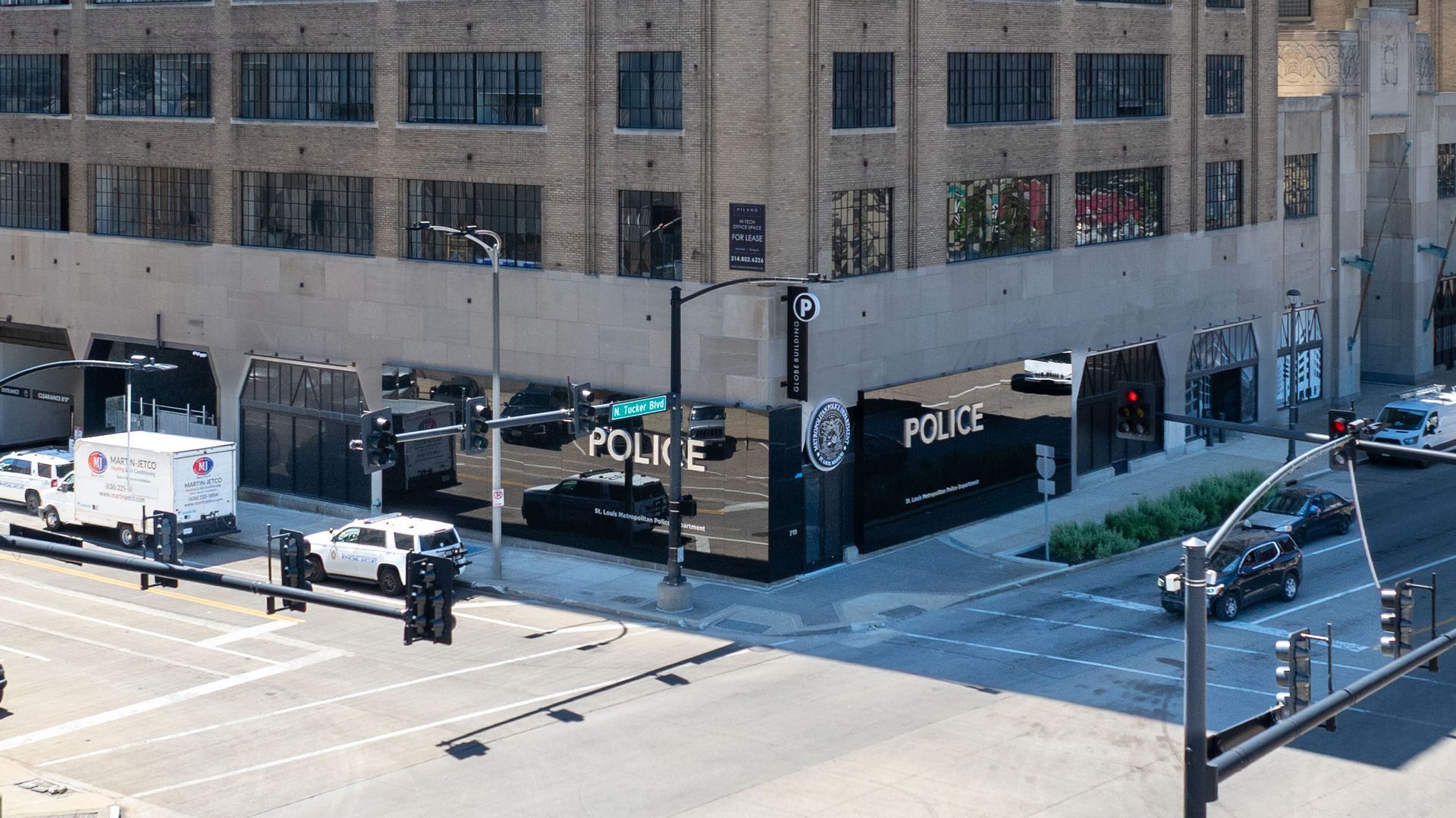
Recently, we were engaged by Superior Restoration and Waterproofing to help document the condition of a 700,000-square-foot historic building in downtown St. Louis.
The project involved capturing high-resolution photographs and video of virtually every inch of the building's exterior to support an evaluation of existing tuckpointing conditions.
Using drones, we were able to safely collect detailed visual documentation from areas that would be difficult, costly, or time-consuming to access using traditional methods. The resulting imagery provided a comprehensive record of the building's condition while minimizing disruption to building operations and surrounding activity.
The project demonstrated just how valuable drones can be outside of traditional marketing applications.
Expanding Beyond Marketing Content
While aerial photography and videography remain important tools for marketing, businesses are increasingly turning to drones for operational and inspection-related purposes.
- As a result, we are expanding our drone service offerings to include:
- Building and facade documentation
- Construction progress monitoring
- Commercial property inspections
- Condition assessments
- High-resolution aerial photography and videography
- Asset documentation
- Roof and exterior evaluations
Whether the goal is to create stronger marketing content or to document the condition of a valuable commercial asset, professional drone operations can deliver information that would otherwise be difficult and expensive to obtain.
We are here to help
For nearly a decade, Cole-Dalton has helped clients use drone photography and videography to create better content and tell better stories. Today, we're bringing that same expertise to commercial inspections, documentation projects, and building assessments throughout the St. Louis region.
The technology has matured. The business applications have expanded. And for many organizations, we're only beginning to see what's possible.